
Questions in 2026 (And How to Answer Them Like a Pro)
The teaching interview in 2026 is no longer about memorising theory. Schools today are assessing something far more important: your real-time decision-making in a diverse, tech-enabled classroom. They want to know—can you think, adapt, and respond like a modern educator? If you have an interview coming up, here are the most common questions you’ll face, what interviewers are actually evaluating, and how to answer them effectively.
“Tell Us About Yourself”
(The Culture Fit Check)
What they’re really assessing:
- Stability
- Personality
- Community fit
How to answer:
Structure your answer in 3 parts:
- Professional identity
- Personal interests
- Alignment with the school
Strong Example:
“Professionally, I’m an educator who focuses on inquiry-based learning and student voice. Outside the classroom, I enjoy trekking and reading about cognitive science. My family is very supportive of my career, and we’re excited to be part of a school community that values both innovation and wellbeing.”
“What Do You Know
About Our School?” (Intentionality Test)
What they’re really assessing:
- Effort
- Genuine interest
- Alignment with school vision
How to answer:
- Mention a specific initiative
- Connect it to your philosophy
Strong Example:
“I noticed your focus on integrated STEM and sustainability initiatives like your Green Campus project. I also saw how students are using technology for real-world problem-solving. That aligns strongly with my belief in connecting classroom learning to real-world impact.”
“How Do You Use AI Responsibly in the Classroom?”
What they’re really assessing:
- Balance between innovation and ethics
- Understanding of academic integrity
How to answer:
Position AI as a tool for thinking, not shortcutting.
Strong Example:
“I treat AI as a co-pilot. For example, students may use AI to generate ideas or perspectives, but their task is to evaluate, refine, and validate that information. This shifts the focus from content generation to critical thinking.”
“How Do You Handle Different Learning Levels in One Class?”
What they’re really assessing:
- Differentiation skills
- Classroom strategy
How to answer:
Use a tiered or flexible learning approach.
Strong Example:
“I use tiered tasks where the core concept remains the same, but the complexity varies. I also incorporate guided learning tools and extension activities so that both struggling and advanced learners stay engaged.”
“Tell Us About a Difficult Student Situation” (SEL Check)
What they’re really assessing:
- Emotional intelligence
- Patience
- Conflict resolution
How to answer:
Reframe behaviour as a need, not a problem.
Strong Example:
“I see students as ‘disengaged’ rather than difficult. In one case, I used a restorative approach, worked with the student to set expectations, and gave them a structured responsibility. Over time, their engagement improved significantly.”
“How Do You Handle Challenging Parents?”
What they’re really assessing:
- Professionalism
- Communication skills
How to answer:
Lead with empathy and data.
Strong Example:
“I focus on building a partnership. I listen to the parent’s concerns, then share student progress with concrete examples. This helps shift the conversation from disagreement to collaboration.”
“Where Do You See Yourself in 5 Years?”
What they’re really assessing:
- Commitment
- Growth mindset
How to answer:
Show ambition within the school ecosystem.
Strong Example:
“In five years, I see myself growing into a mentor role, contributing to curriculum development, and possibly leading initiatives around innovation or student wellbeing within the school.”
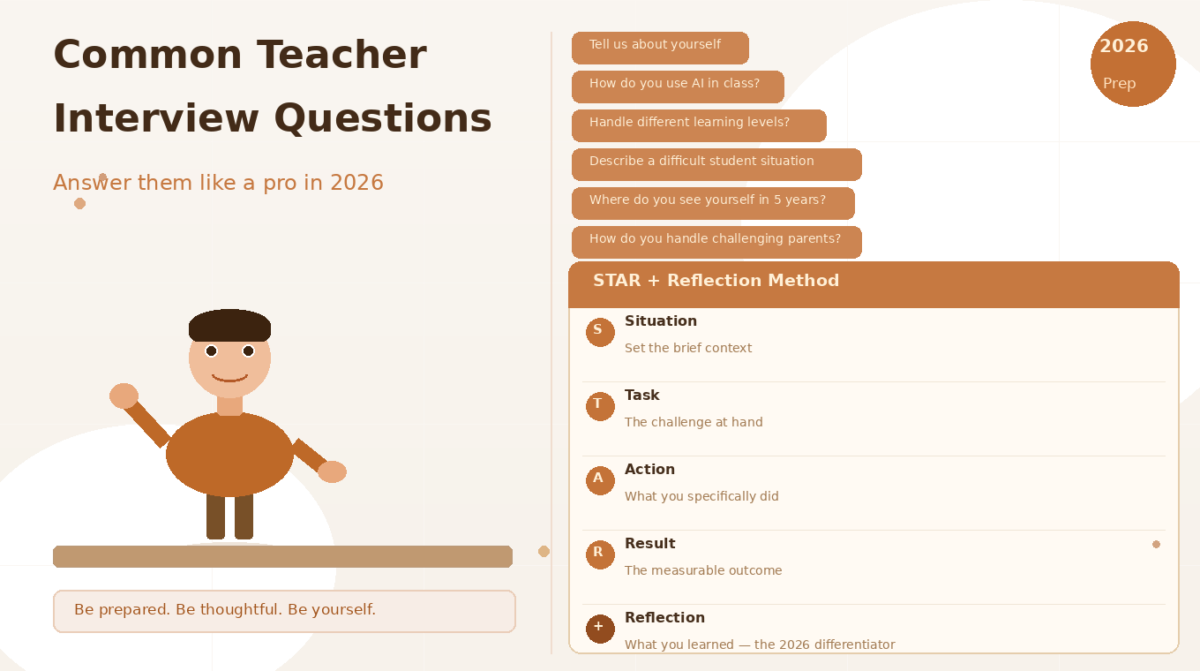
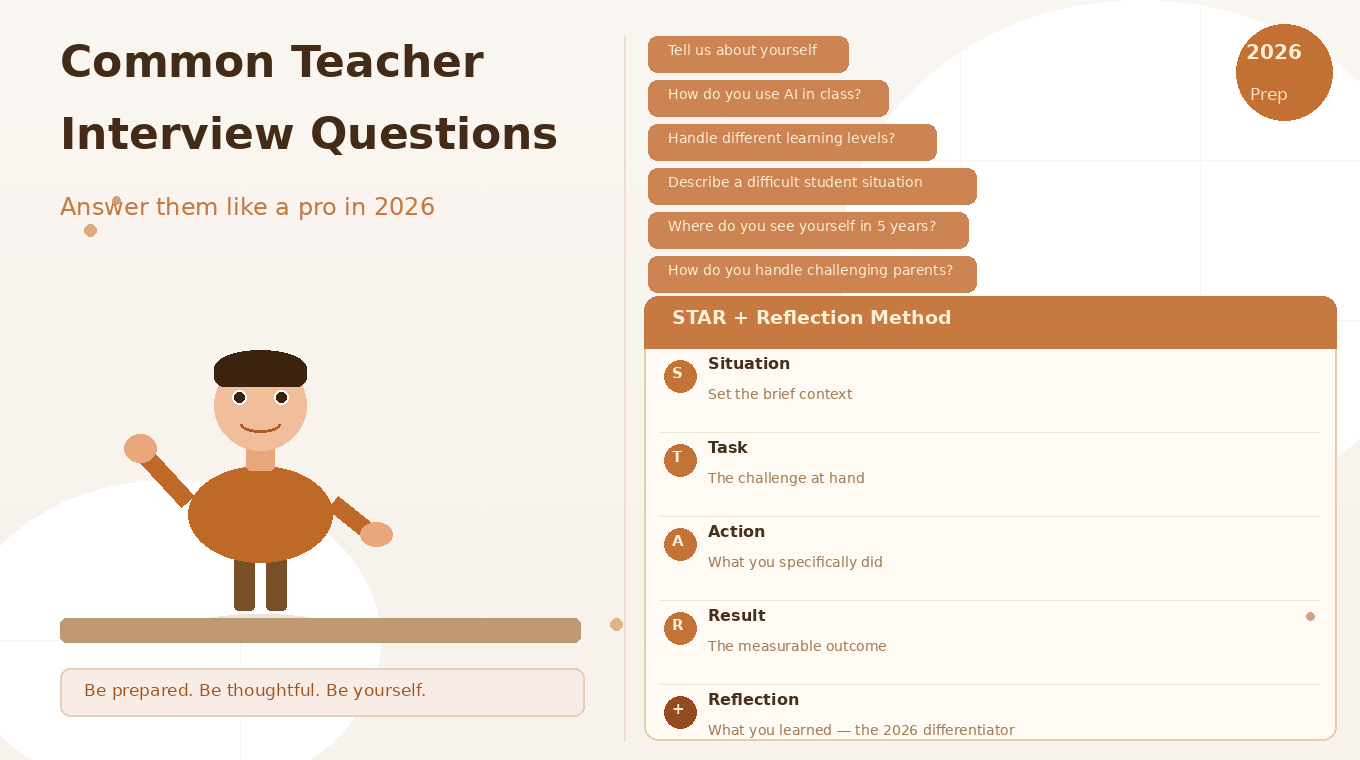
The STAR + Reflection Method (Your Secret Weapon)
Structure your answers using this framework:
-
S – Situation:
Brief context -
T – Task:
The challenge -
A – Action:
What you did -
R – Result:
Outcome -
+ Reflection:
What you learned
👉 The reflection is what sets 2026 candidates apart.
Conclusion:
Be Real, Not Perfect
Schools have seen hundreds of polished answers.
What they are looking for now is authenticity.
Be prepared. Be thoughtful. But most importantly—be yourself.
That’s what makes a teacher memorable.
Looking for
Teaching Opportunities?
Join The Staff Project Teacher Network and get matched with leading schools across Bangalore and beyond.
📩 Send your CV to: jobs@thestaffproject.com
FAQs
Questions usually focus on classroom management, differentiation, AI usage, and parent communication.
Prepare real examples, practice structured answers, and understand modern teaching trends like AI and SEL.
Yes, many schools now expect basic familiarity with AI tools and how they support learning.