
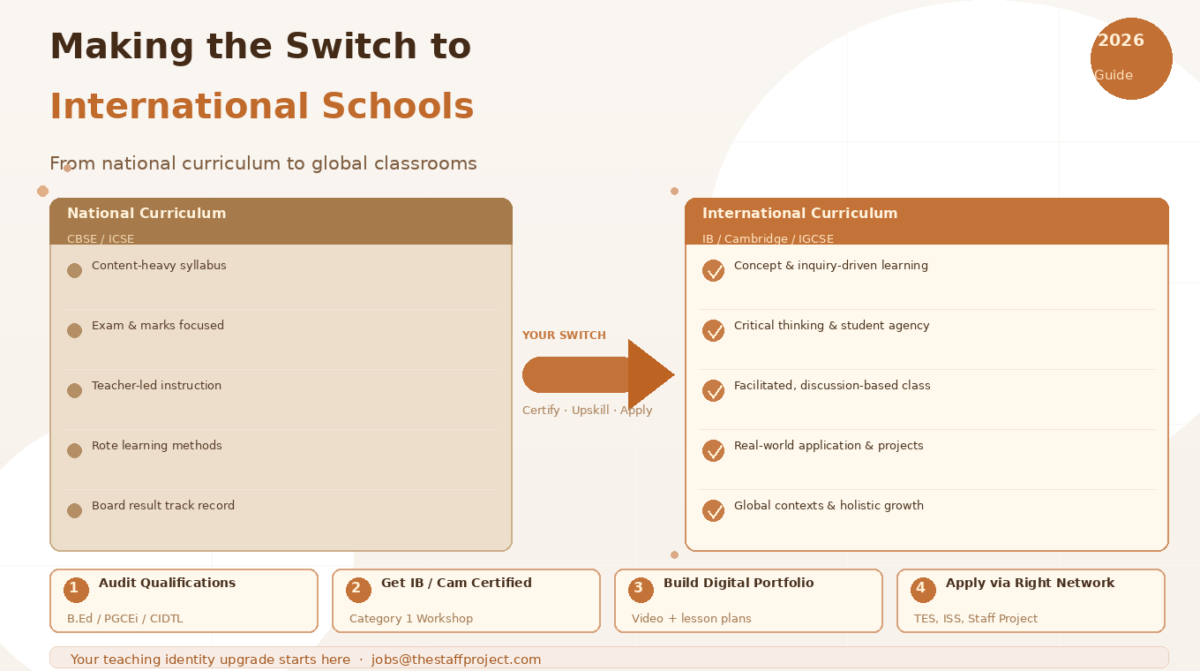
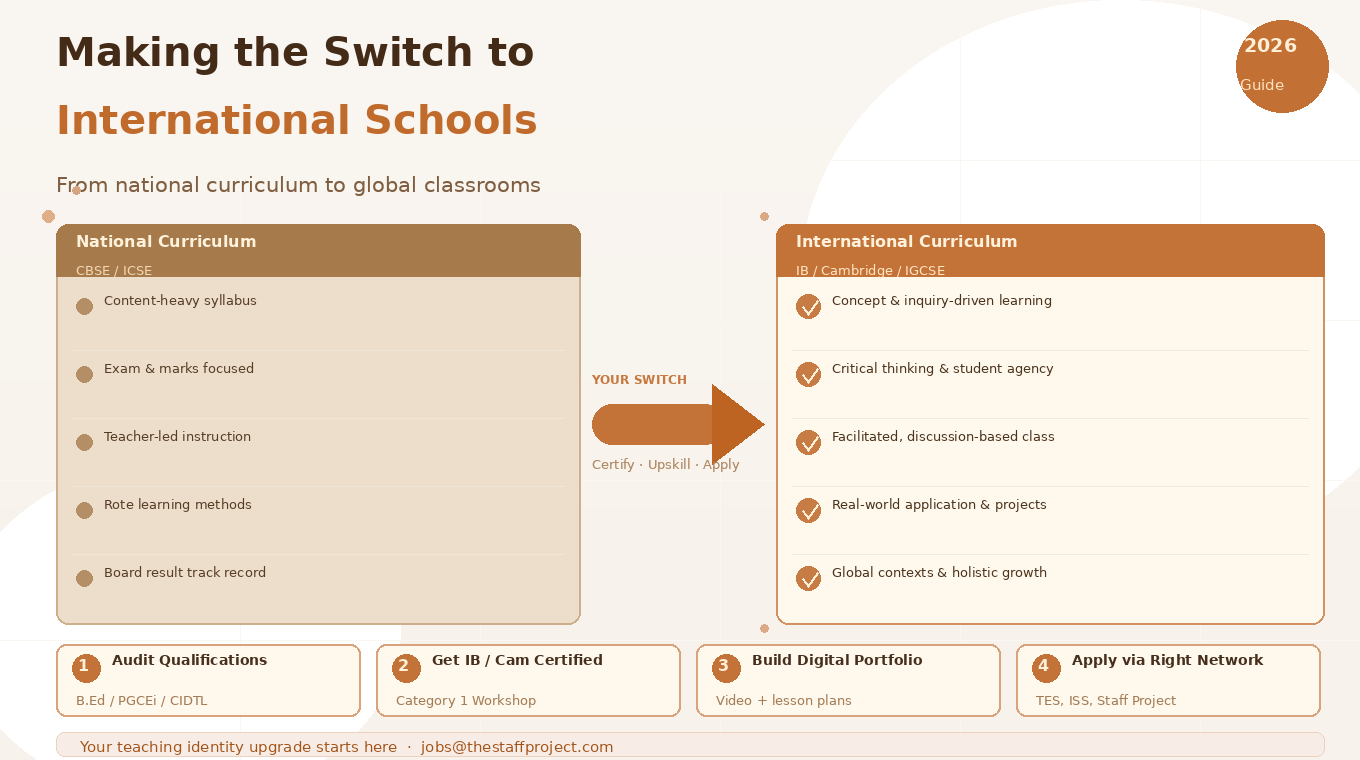
A Step-by-Step Guide
The “International School” dream—better pay, global exposure, and modern pedagogy—is more achievable in 2026 than ever before. But making the shift from CBSE/ICSE to IB or Cambridge isn’t automatic. It requires a clear strategy, the right certifications, and a mindset shift. If you’re planning this transition, here’s your step-by-step roadmap.
Step 1: Audit Your Qualifications
Before applying, check if you meet the baseline expectations.
Minimum requirements:
-
Degree:
Bachelor’s or Master’s in your subject -
Certification:
B.Ed (minimum); PGCEi or CIDTL adds strong value -
Experience:
2–3 years preferred (freshers can start as assistant teachers)
👉 Think of this as your eligibility filter before entering the global market.
Step 2: Choose Your Curriculum Path (IB vs Cambridge)
Avoid applying randomly—each curriculum has a distinct philosophy.
IB (International Baccalaureate)
- Focus: Inquiry-based, concept-driven learning
- First step: IB Category 1 Workshop
- Skills needed: Facilitation, reflection, student agency
Cambridge (IGCSE/A Levels)
- Focus: Academic depth and structured assessment
- First step: Understand syllabus and exam frameworks
- Skills needed: Subject mastery, exam preparation strategies
👉 Choose based on your teaching style—not just availability.
Step 3: Shift to an Inquiry-Based Mindset
This is the biggest transition challenge.
What needs to change
- Move from lecturing → facilitating
- Focus on questions → not just answers
- Design experiences → not just lessons
How to demonstrate this:
- Use project-based learning examples
- Mention Socratic discussions or real-world applications
- Show how students explore independently
2026 Edge:
Highlight how you use tools like AI or digital platforms to support self-directed learning.
Step 4: Build a Digital Teaching Portfolio
Your CV alone is no longer enough.
Include:
- 1. Micro-Teaching Video (1–2 minutes)
- Explain a concept clearly
- Use a digital tool or whiteboard
- 2. Sample Lesson Plans
- Show differentiation (basic, intermediate, advanced)
- 3. Student Feedback Samples
- Highlight how you personalise feedback
- 4. LinkedIn Profile
- Clean, updated, and aligned with your teaching philosophy
👉 This is what makes recruiters remember you.
Step 5: Know Where to Look (Hidden Job Market)
Most international school roles are not advertised traditionally.
Where to search:
- Global platforms (TES, Search Associates, ISS)
- LinkedIn (follow school HR leaders)
- Recruitment networks like The Staff Project
💡We regularly connect teachers with international and premium schools looking for future-ready educators.
Pro Tip: The “Bridge Year” Strategy
If Tier-1 schools feel out of reach, don’t stop.
Look for dual-curriculum schools (CBSE + IB/Cambridge).
Why this works:
- You gain international exposure
- You understand the curriculum in real classrooms
- You transition smoothly within 1 year
👉 This is one of the smartest entry strategies in 2026.
Conclusion:
Upgrade Your Teaching Identity
Moving to an international school is not just a job switch—it’s a professional upgrade.
When you align your:
- Certifications
- Teaching approach
- Digital presence
You become a strong candidate for global opportunities.
🚀 Ready to Transition to
International Schools?
Join The Staff Project Teacher Network and get matched with leading schools across Bangalore and beyond.
📩 Send your CV to: jobs@thestaffproject.com
FAQs
Start with IB training, shift to inquiry-based teaching, and gain relevant experience.
It’s the minimum, but certifications like PGCEi or CIDTL improve your chances.
Yes, most prefer 2–3 years, but entry roles are available for beginners.